Blog · Label reading
Berberine 8 Percent Extract: Reading Granular Berberine HCl 8% on the FemiPro Label
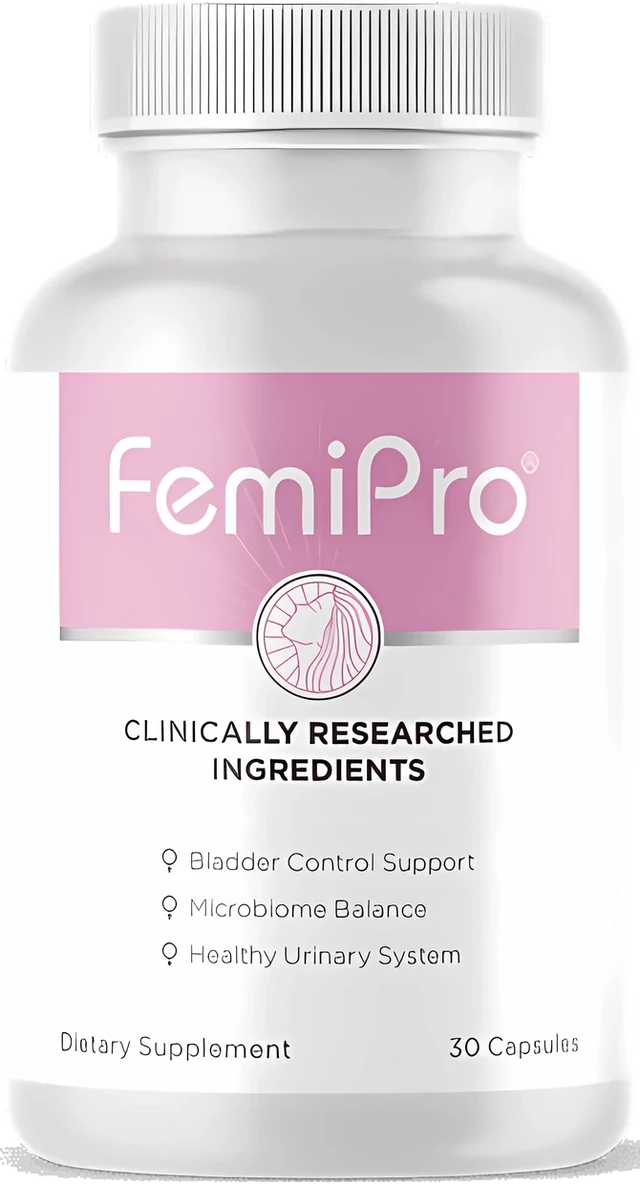
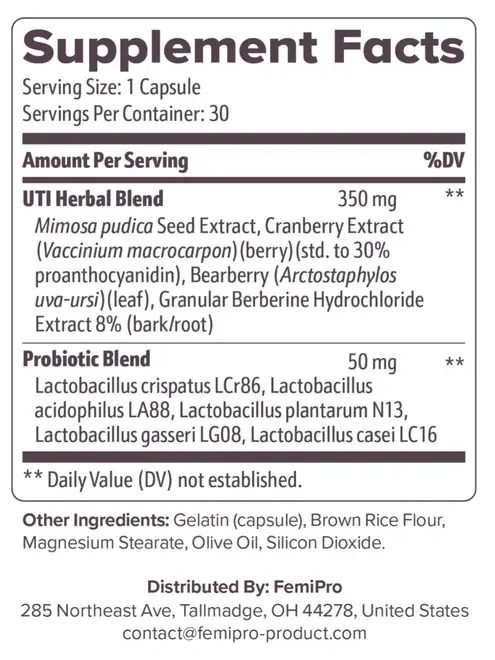
Berberine 8 percent extract is how FemiPro's fourth herbal line reads: "granular berberine hydrochloride extract 8% (bark/root)". The label does not say what the 8% measures. If it is berberine, one capsule holds at most 7 mg of it. The line itself is capped at 87.5 mg.
Written by the FemiPro label deskUpdated · 4 min read
The wording01
What does berberine HCl 8% mean on a label?
Berberine HCl 8% most likely means an extract standardized so about 8% of it is berberine, in its hydrochloride (HCl) salt form. That is a reading, not a fact, because the FemiPro label gives no definition.
Reading one: 8% of the extract is berberine. Reading two: 8% describes something else. The label cannot tell you which.
A second reading is possible. The 8% might refer to something else in the extract, such as a different marker or a grade. The label prints only the number and the part of the plant, bark or root.
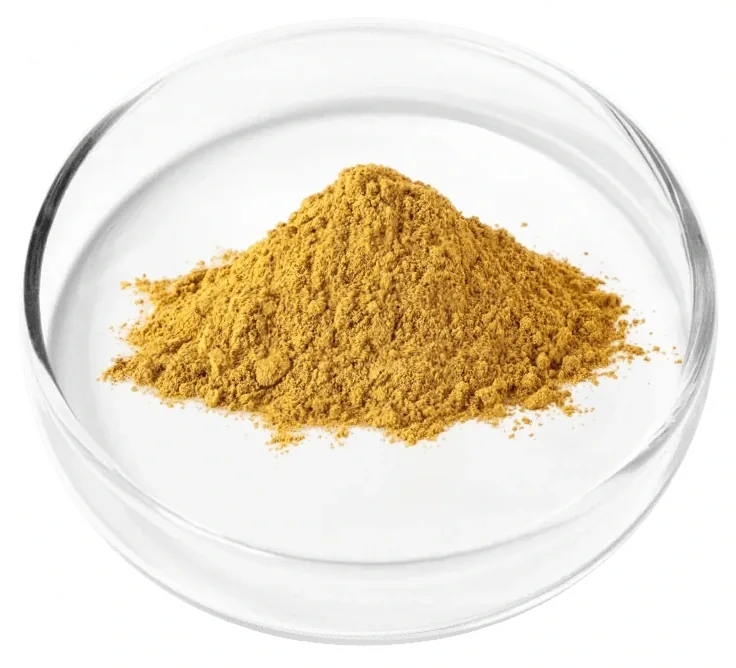
The word "granular" describes the form of the ingredient before it went into the capsule. It says nothing about strength or amount, and no ingredient testing report is published to settle the question.
The math02
How much berberine could one FemiPro capsule hold at 8%?
One FemiPro capsule could hold at most 7 mg of berberine if 8% means berberine. The sum is short: 87.5 mg of extract times 0.08 equals 7 mg.
The 87.5 mg ceiling comes from the label order. The herbal blend weighs 350 mg and berberine is the fourth of four lines listed by weight, so it cannot exceed 350 divided by 4 (21 CFR 101.36, supplement labeling). If the first three lines take more, the berberine line is smaller.
| If the berberine line weighs | Extract | Berberine at 8% |
|---|---|---|
| Its ceiling (an equal share of 4) | 87.5 mg | 7.0 mg |
| Half the ceiling | 43.75 mg | 3.5 mg |
| A quarter of the ceiling | 21.9 mg | 1.75 mg |
The label prints none of these rows. Each is a possible case, and the first is the most the label allows.
Against research03
How does 7 mg compare with studied berberine amounts?
Seven milligrams sits far below the usual herbal dose, which LiverTox cites as 250 to 500 mg two or three times daily (LiverTox, Berberine). Even at its ceiling, a capsule holds a small fraction of that.
The research on berberine also asks a different question. The umbrella review covered blood glucose, lipids and inflammatory markers, with no bladder or urinary outcomes (Berberine umbrella review, 2023). So a small amount of berberine in a bladder capsule has no matching trial to hold it up against.
| Label line | Blend and place | Most per capsule | Amount used in research | Evidence |
|---|---|---|---|---|
| Mimosa pudica Seed Extract | UTI Herbal Blend, line 1 | at most 350 mg | No human dose established (Muhammad 2016, Mimosa pudica review) | Traditional use and lab data; no human bladder trial |
| Cranberry Extract (Vaccinium macrocarpon) (berry) (std. to 30% proanthocyanidin) | UTI Herbal Blend, line 2 | at most 175 mg | Trials used many juices, tablets and doses; no single PAC dose is set (Cochrane 2023, cranberries for preventing UTIs) (NCCIH, Cranberry) | Moderate: fewer repeat UTIs in women prone to them; not a treatment |
| Bearberry (Arctostaphylos uva-ursi) (leaf) | UTI Herbal Blend, line 3 | at most 116.7 mg | EU traditional use: adult women, for no longer than one week (EMA/HMPC, Uvae ursi folium (bearberry leaf)) (LiverTox, Uva Ursi) | Traditional use only; few modern trials |
| Granular Berberine Hydrochloride Extract 8% (bark/root) | UTI Herbal Blend, line 4 | at most 87.5 mg | Usual herbal dose 250-500 mg two or three times a day (Berberine umbrella review, 2023) (LiverTox, Berberine) | Studied for blood sugar and lipids, not for the bladder |
| Lactobacillus crispatus LCr86 | Probiotic Blend, line 1 | at most 50 mg | Trials of a different strain (CTV-05) used vaginal inserts, not capsules (Cohen et al. 2020 NEJM, Lactin-V and bacterial vaginosis) (Stapleton et al. 2011, L. crispatus and recurrent UTI) | Strain LCr86: no published human trial found |
| Lactobacillus acidophilus LA88 | Probiotic Blend, line 2 | at most 25 mg | Studies dose probiotics in CFU, not milligrams (NCCIH, Probiotics: usefulness and safety) | Strain LA88: no published human trial found |
| Lactobacillus plantarum N13 | Probiotic Blend, line 3 | at most 16.7 mg | Studies dose probiotics in CFU, not milligrams (NCCIH, Probiotics: usefulness and safety) | Strain N13: no published human trial found |
| Lactobacillus gasseri LG08 | Probiotic Blend, line 4 | at most 12.5 mg | Studies dose probiotics in CFU, not milligrams (NCCIH, Probiotics: usefulness and safety) | Strain LG08: no published human trial found |
| Lactobacillus casei LC16 | Probiotic Blend, line 5 | at most 10 mg | Studies dose probiotics in CFU, not milligrams (NCCIH, Probiotics: usefulness and safety) (Cochrane 2015, probiotics for preventing UTIs) | Strain LC16: no published human trial found |
A fair way to hold this: berberine in FemiPro is a label line, not a dose. Nobody can show from the bottle that it reaches any amount tied to a result. That is not a charge against the capsule. It is the limit of what a blend label allows.
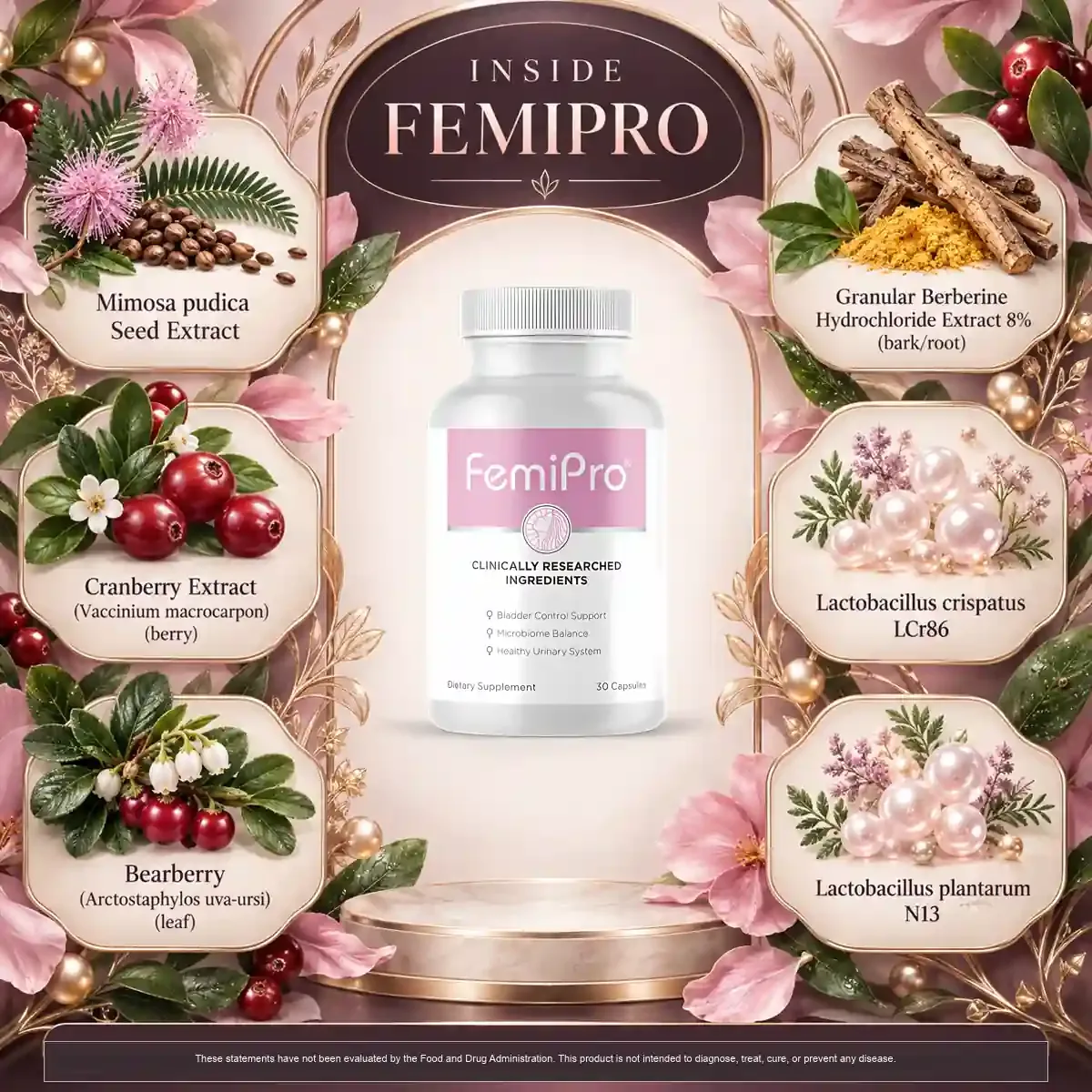
Read the table for all nine lines. The FemiPro supplement facts page explains how each ceiling is built.
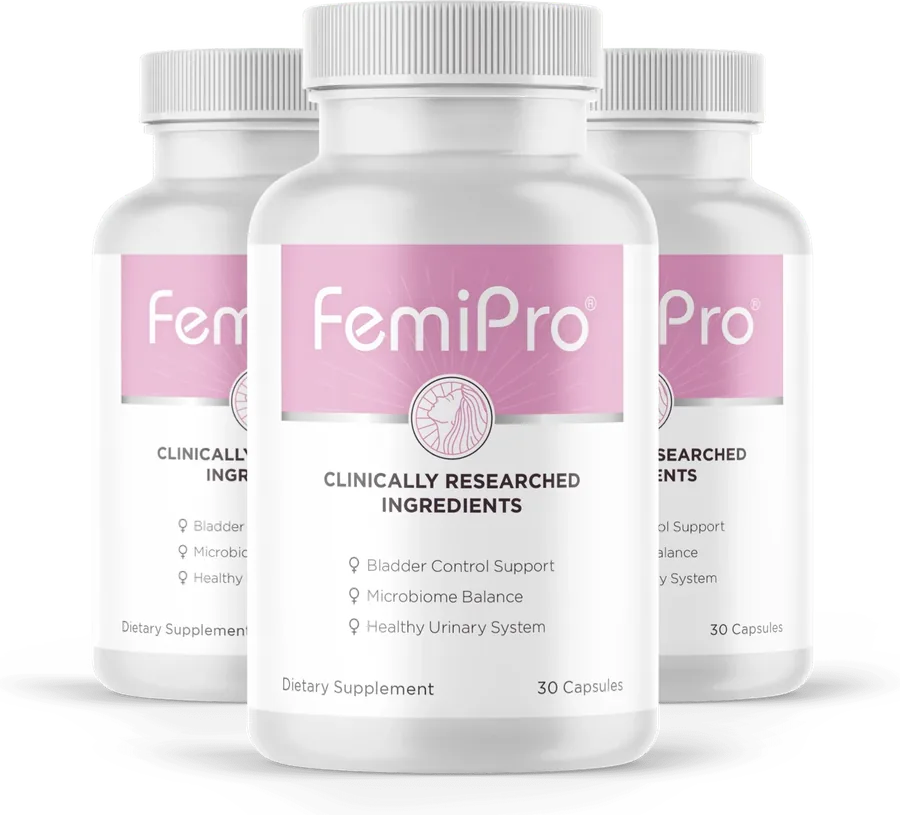
FemiPro: from $49 a bottle30 capsules · 1, 3 or 6 bottles · free US shipping · 60-day money-back guarantee
See packsWhat to ask04
What should you ask the seller about the 8%?
Ask the order desk for the marker the 8% refers to, the weight of the berberine line and a lab report for the lot. The desk is reached at +1 (302) 200-3480 with your order ID, and the label's distributor is listed in the Supplement Facts panel.
Keep the replies you get. If the desk cannot give the marker or the weight, you have learned something about how open the label is.
The lot codes the seller publishes, FEM-26/MY-3535 and FEM-3535-26-MY, are seller references, not lab proof. A lab report would show the berberine percentage actually found.
A small amount does not mean no caution. Berberine can change how the body handles some drugs (Berberine drug interactions review, 2026), and the label asks pregnant or nursing mothers to consult a physician. Keep taking prescribed medicine, and read the FemiPro berberine page for the wider file.
U.S. stocking partner for FemiPro
Ready to try FemiPro?
Check your medicines first, then pick a pack. Every pack ships free in the US, six bottles cost the least per bottle, and each order carries the 60-day money-back guarantee.
- Secure checkout
- 60-day money-back guarantee
- Ships from the U.S.
FAQ05
Berberine extract percentage questions, answered
Is berberine HCl the same as berberine?
Berberine HCl is berberine in its hydrochloride salt form, a common supplement form. The FemiPro label calls it granular berberine hydrochloride extract 8%, so the strength still depends on what the 8% measures.
Is 8% a high or low berberine strength?
The label does not define 8%, so no one can rank it. Even if it means berberine, the line caps at 87.5 mg, giving at most 7 mg. That is small beside the usual herbal doses.
Does FemiPro publish a berberine lab test?
No lab report is published. The lot numbers on the seller's pages are references, not test results. Ask the order desk for a certificate of analysis for your lot before relying on the percentage.
Who wrote this06
Written and reviewed by
Pages built from the label, the sales page and linked NIH, FDA, FTC and peer-reviewed sources.
Last updated . Read our editorial standards and how we check reviews. This website is run by a U.S. stocking partner for FemiPro, not by the manufacturer or the label's distributor. We earn money when you buy through our order links.
Keep reading
More about FemiPro
U.S. stocking partner for FemiPro
Ready to try FemiPro?
Check your medicines first, then pick a pack. Every pack ships free in the US, six bottles cost the least per bottle, and each order carries the 60-day money-back guarantee.
- Secure checkout
- 60-day money-back guarantee
- Ships from the U.S.