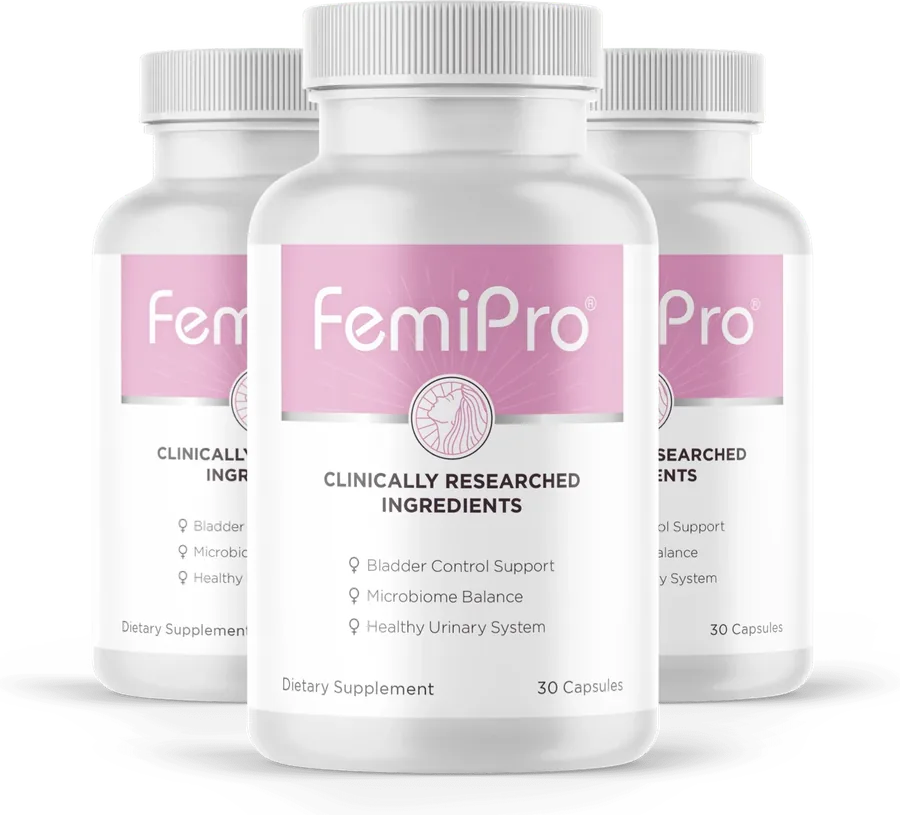
Herbal line 1 of 4
Mimosa Pudica Seed in FemiPro: Traditional Use, Thin Evidence
Mimosa pudica seed extract is the first and largest line of FemiPro's 350 mg "UTI Herbal Blend", so each capsule holds at least 87.5 mg of it and possibly most of the blend. The plant has a long traditional use, including for urinary complaints, but no controlled human trial has tested it for bladder control.
Written by the FemiPro label deskUpdated
The plant01
What is Mimosa pudica seed?
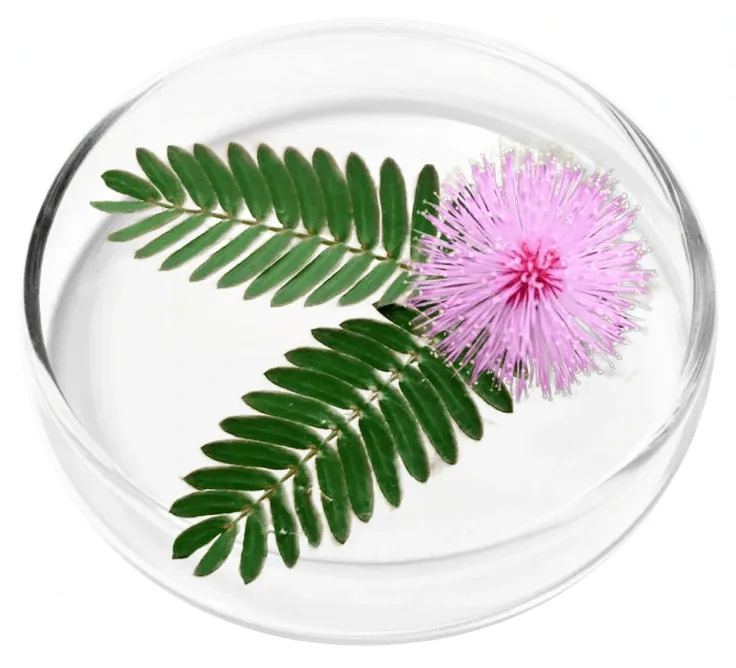
Mimosa pudica seed comes from the "sensitive plant", a low, creeping legume whose feathery leaves fold shut when touched. It grows in warm regions and has pink, pom-pom flowers. The seeds form in small, flat pods.
Traditional medicine has used the leaves, roots and seeds for many complaints. A 2016 review lists urinary infections among them (Muhammad 2016, Mimosa pudica review). FemiPro uses an extract of the seed, not the leaf.
The label does not say how the extract is made, which solvent is used or how strong it is. It gives only the name and the place in the blend.
On the FemiPro label
"Mimosa pudica Seed Extract", line 1 of the 350 mg "UTI Herbal Blend". It comes before cranberry extract, bearberry leaf and the berberine extract.
What it is not
It is not the mimosa tree sold as a garden shrub, and it is not the orange-juice cocktail. Same word, different plants and things.
Per capsule02
How much Mimosa pudica is in FemiPro?
The FemiPro label does not print an amount for Mimosa pudica seed extract. It lists only the 350 mg total of the herbal blend. But the label order lets us work out a range.
Blend lines are listed from most to least by weight (21 CFR 101.36, supplement labeling). Mimosa is first of four, so it is the heaviest. The heaviest of four lines that add up to 350 mg must weigh at least a quarter of it: 350 divided by 4 is 87.5 mg. At the top end, it could be nearly the whole 350 mg.
So each capsule holds somewhere between 87.5 mg and almost 350 mg of the extract. That is a wide range, and no research dose exists to compare it with.
| Name on the label | Mimosa pudica Seed Extract |
|---|---|
| What it is | Seed of the 'sensitive plant', a creeping legume whose leaves fold when touched |
| Place on the label | Line 1 of 4 in the 350 mg UTI Herbal Blend |
| Amount per capsule | Not printed; line 1 of 4 in the 350 mg UTI Herbal Blend. Label order caps it at 350 mg (it is the largest line, so it could be most of the blend). |
| Amount used in research | No human dose established |
| Strength of evidence | Traditional use and lab data; no human bladder trial |
| Marketed or traditional use | Traditional remedy, including for urinary complaints |
| Main caution | No human safety trials found; traditional use only. |
Label order03
Why is Mimosa pudica listed first?
Mimosa pudica is listed first because it weighs the most of the four herbal lines. Federal labeling rules make a blend list its ingredients in order of weight (21 CFR 101.36, supplement labeling). First place is a fact about weight, not about importance or proof.
That has a knock-on effect. If mimosa takes a large share, less room is left for cranberry, the best-studied ingredient in the capsule. The table shows the most and least each line could weigh.
| Line | Ingredient | Least it could weigh | Most it could weigh |
|---|---|---|---|
| 1 | Mimosa pudica seed extract | 87.5 mg | Almost 350 mg |
| 2 | Cranberry extract (30% PACs) | Not printed | 175 mg |
| 3 | Bearberry leaf | Not printed | 116.7 mg |
| 4 | Berberine HCl extract 8% | Not printed | 87.5 mg |
Ceilings come from the label order: line k of a 350 mg blend weighs at most 350 divided by k. Read the cranberry side on cranberry extract in FemiPro.
Research04
What does research say about Mimosa pudica seed?
Research on Mimosa pudica is mostly lab and animal work. The 2016 review lists activities credited to the plant, such as antioxidant, antibacterial, anti-inflammatory, diuretic and blood-sugar effects (Muhammad 2016, Mimosa pudica review). Those come from test tubes and animals, not from women taking capsules.
The review describes no controlled human trial for bladder control. We found none either. The seed's best-known modern use is technical: its gel-forming sugar, glucuronoxylan, is studied as a material for slow-release drug tablets.
Lab results often fail in people, which is why health claims need human trials of the same product (FTC, Health Products Compliance Guidance).
What the evidence shows
A long traditional use, including for urinary complaints. A range of effects in lab and animal studies. A seed gel used in drug-release research.
What it does not show
Any benefit for leaks or bladder control in people. A safe or useful human dose. How it acts alongside cranberry, bearberry and berberine.
Bladder05
Does Mimosa pudica help the bladder?
No human study shows that Mimosa pudica seed helps the bladder. Its link to bladder health rests on traditional use and lab data. The label's "Bladder Control Support" is a structure/function phrase, and the FDA did not evaluate it (21 CFR 101.93, structure/function claims).
The US urology guideline on overactive bladder finds the evidence insufficient for herbal remedies and nutraceuticals (AUA/SUFU, Overactive Bladder guideline 2024). It puts behavioral steps first.
Those steps have real trials behind them. In a Cochrane review, women with stress leaks who did pelvic-floor muscle training were about eight times more likely to report being cured: 56% against 6% without training (Cochrane, pelvic floor muscle training for UI in women). A guide to the exercises sits on pelvic floor basics.

FemiPro: from $49 a bottle30 capsules · 1, 3 or 6 bottles · free US shipping · 60-day money-back guarantee
See packsA popular claim06
Is Mimosa pudica seed a parasite cleanse?
No trial shows that Mimosa pudica seed clears intestinal parasites. Online sellers market the seed powder as a "parasite cleanse", but we found no controlled human study behind that idea.
FemiPro is not sold as a parasite product, and its label makes no such claim. The seed sits in the capsule as part of a bladder-support blend.
Worms and other parasites are diagnosed with a stool test and treated with medicine a clinician prescribes. If you think you have one, see a clinician rather than buying a powder.
Safety07
Is Mimosa pudica seed safe?
The safety of Mimosa pudica seed in people is unknown. No human safety trial has been published, so there is no data on side effects, long-term use or interactions with medicines. Traditional use is not the same as tested safety.
The FemiPro label asks anyone pregnant or nursing, under 18 or living with a medical condition to consult a physician first. That advice fits mimosa well, because nothing is known about it in pregnancy.
Many supplements have not been tested in pregnant or nursing women, NCCIH notes, and they can interact with medicines (NCCIH, Using Supplements Wisely).
Keep taking prescribed medicine, and tell your doctor or pharmacist about any supplement you add. If you feel unwell after starting, stop and call your clinician. The other cautions in the capsule, from bearberry to berberine, are on FemiPro side effects.
The rest of the blend08
Where does Mimosa pudica fit among FemiPro's ingredients?
Mimosa pudica seed is the bulk of FemiPro's herbal blend and the least studied part of it. Cranberry, line 2, has the strongest human evidence, though for preventing repeat UTIs rather than leaks (Cochrane 2023, cranberries for preventing UTIs).
See all nine label lines side by side on FemiPro ingredients, or move to the next profile below.
FAQ09
Mimosa pudica questions
What is Mimosa pudica seed?
The seed of the sensitive plant, a creeping legume whose leaves fold when touched. Traditional medicine has used parts of the plant for many complaints, including urinary ones. FemiPro lists an extract of the seed as the first line of its 350 mg herbal blend.
Is Mimosa pudica a parasite cleanse?
Not on the evidence. The seed powder is marketed online as a parasite cleanse, but we found no controlled human trial behind it. Parasites are diagnosed with a stool test and treated with prescribed medicine. FemiPro makes no parasite claim at all.
How much Mimosa pudica is in FemiPro?
The label does not say. As the heaviest of four lines in a 350 mg blend, it must weigh at least 87.5 mg, since 350 divided by 4 is 87.5, and it could be almost the whole 350 mg. No human dose exists to compare it with.
Is Mimosa pudica safe?
Its safety in people has not been studied in trials, so side effects and interactions are unknown. The label asks pregnant or nursing women, anyone under 18 and people with a medical condition to consult a physician first. Tell your pharmacist about it if you take daily medicines.
Does Mimosa pudica help the bladder?
No human trial shows that it does. Its bladder reputation comes from traditional use and lab studies. The US urology guideline finds evidence insufficient for herbal remedies for overactive bladder, while pelvic-floor training has strong trial support for stress leaks.
Why is Mimosa pudica listed first?
Because it weighs the most of the four herbal lines. Blends must list ingredients from heaviest to lightest. First place says nothing about strength of evidence; in FemiPro the best-studied herb, cranberry, sits second and can weigh at most 175 mg.
Who wrote this10
Written and reviewed by
Pages built from the label, the sales page and linked NIH, FDA, FTC and peer-reviewed sources.
Last updated . Read our editorial standards and how we check reviews. This website is run by a U.S. stocking partner for FemiPro, not by the manufacturer or the label's distributor. We earn money when you buy through our order links.
Keep reading
More about FemiPro

U.S. stocking partner for FemiPro
Ready to try FemiPro?
Check your medicines first, then pick a pack. Every pack ships free in the US, six bottles cost the least per bottle, and each order carries the 60-day money-back guarantee.
- Secure checkout
- 60-day money-back guarantee
- Ships from the U.S.