Guide
Menopause Bladder Problems: Leaks, Urgency and UTIs
Menopause bladder problems are urgency, frequent trips, night waking, leaks and repeat UTIs that start or worsen as estrogen falls. Doctors group many of them under the genitourinary syndrome of menopause (GSM), which affects roughly 27% to 84% of women after menopause. Low-dose vaginal estrogen has guideline support; alternative supplements do not.
Written by the FemiPro label deskUpdated
What changes01
What bladder problems are common after menopause?
The most common bladder problems after menopause are sudden urges, going more often, waking at night to pee, leaks and bladder infections that keep coming back. Many women notice two or three at once.
NIDDK lists menopause among the times when leak risk rises, next to pregnancy and childbirth (NIDDK, Urinary Incontinence (definition and facts)). Waking more than twice a night or going eight or more times a day are markers worth raising with a clinician (Mayo Clinic, Overactive bladder).
These changes are common. They are also treatable, and most women do not need to wait them out.
Why it happens02
Why does menopause cause bladder problems?
Menopause causes bladder problems mainly because estrogen falls, and the tissue of the urethra, bladder neck and vagina depends on it. With less estrogen the lining gets thinner and drier, and the support around the urethra gets weaker (AUA/SUFU/AUGS, Genitourinary Syndrome of Menopause 2025).
The vaginal microbiome shifts too. Menopause changes the mix of vaginal bacteria, and Mayo Clinic links that change to more urinary infections (Mayo Clinic, Urinary tract infection). Pelvic-floor muscles also lose strength with age, and years of childbirth or lifting can add to it.
| What you notice | Likely driver | First step |
|---|---|---|
| Leaks with a cough or lift | Weaker pelvic floor and urethral support | Pelvic-floor training for 3 months or more |
| Sudden urges, rushing | Thinner, more sensitive bladder lining | Bladder training; ask about vaginal estrogen |
| Waking at night to pee | Urgency plus evening fluids | Diary; shift drinks earlier in the day |
| Infections that keep coming back | A shift in vaginal bacteria | A clinician's plan, often vaginal estrogen |
| Burning, dryness, pain with sex | GSM in the vaginal tissue | Moisturizers, lubricants; ask about treatment |
GSM03
What is genitourinary syndrome of menopause?
Genitourinary syndrome of menopause, or GSM, is the set of vaginal, sexual and urinary changes caused by falling estrogen and androgen levels. Its urinary side includes urgency, frequency, night waking, painful urination, leaks and repeat UTIs (AUA/SUFU/AUGS, Genitourinary Syndrome of Menopause 2025).
The North American Menopause Society says GSM affects roughly 27% to 84% of postmenopausal women and is often missed. In most cases, the symptoms can be managed well (NAMS 2020, GSM position statement).
It is also undertreated, so naming it at a checkup helps.
Over the counter
Vaginal moisturizers used a few times a week, and lubricants for sex. They ease dryness but do not change the tissue itself.
Prescription, local
Low-dose vaginal estrogen, or vaginal DHEA. These act on the tissue where symptoms start.
Prescription, other
Systemic hormone therapy or ospemifene, chosen with a clinician who knows your history.
Vaginal estrogen04
Does vaginal estrogen help menopause bladder problems?
Yes, vaginal estrogen helps some menopause bladder problems, and repeat UTIs have the clearest evidence. The 2025 AUA guideline tells clinicians to recommend it for peri- and postmenopausal women with repeat UTIs, unless there is a reason not to (AUA/CUA/SUFU, Recurrent uncomplicated UTI guideline 2025).
It comes as a cream, a small tablet or a ring placed in the vagina. The dose is low and acts mostly on local tissue. It is a prescription medicine, so the choice belongs with your clinician.
Many women never hear about vaginal estrogen unless they ask. If you have urgency, dryness or a second UTI in six months, say "Could vaginal estrogen help me?" at your next visit.
Supplements05
Are menopause supplements safe for the bladder?
Menopause supplements are not proven to help the bladder, and their safety depends on what is inside and what else you take. The AUA guideline states that the evidence does not support alternative supplements for GSM (AUA/SUFU/AUGS, Genitourinary Syndrome of Menopause 2025).
Supplements do not need FDA approval before they are sold (NIH ODS, Supplements: What You Need to Know). A label can also differ from what is in the bottle, and words like "standardized" or "certified" do not prove quality (NCCIH, Using Supplements Wisely).
- Tell every doctor and your pharmacist about each supplement you take.
- Check for herbs that change how drugs are handled, such as berberine.
- Be wary of any product that claims to balance hormones or replace estrogen.
- Give a new product a fixed trial with a diary, then decide.
FemiPro: from $49 a bottle30 capsules · 1, 3 or 6 bottles · free US shipping · 60-day money-back guarantee
See packsWhere FemiPro sits06
Is FemiPro a menopause supplement?
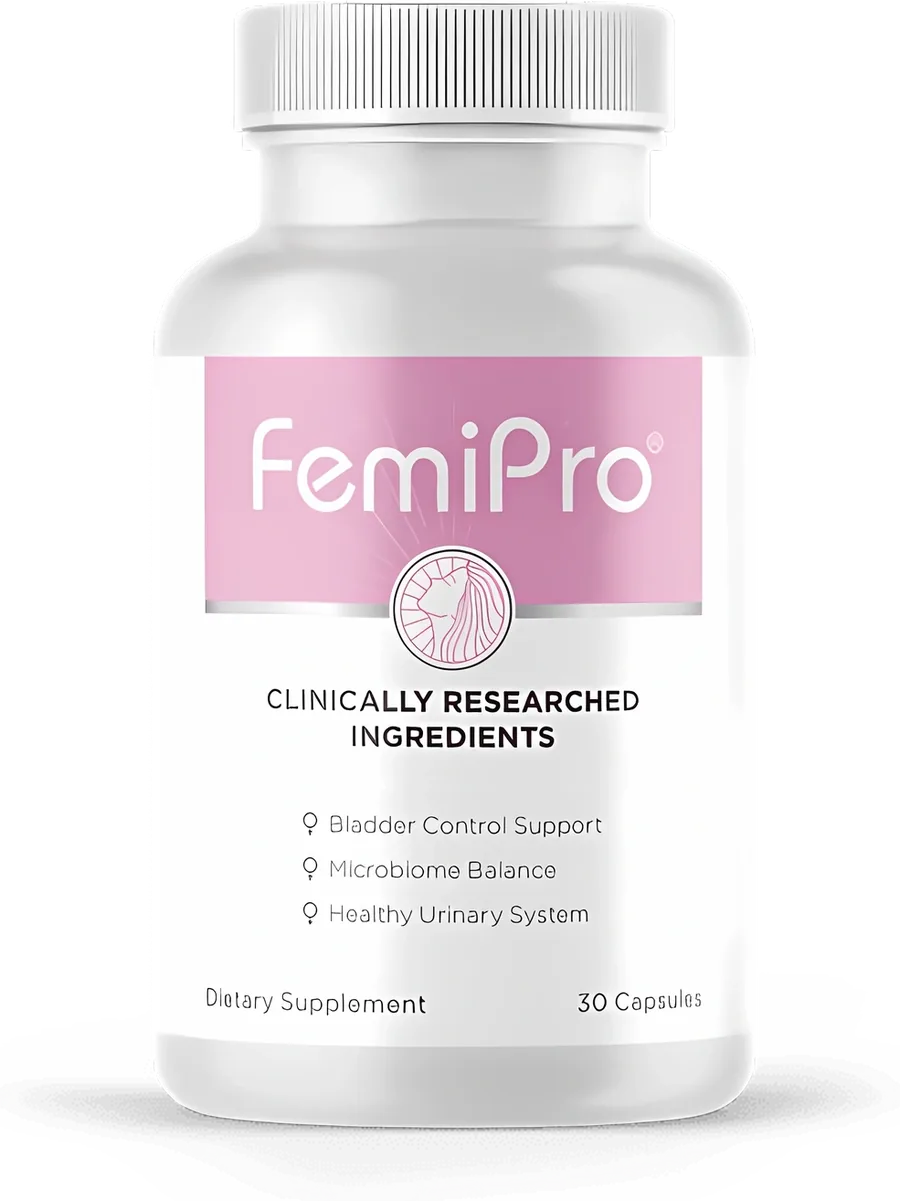
No, FemiPro is not a menopause supplement. Its label never mentions menopause, and none of its nine lines contains hormones or plant estrogens.
It is sold for "Bladder Control Support". Its herbal blend holds Mimosa pudica seed, cranberry, bearberry leaf and berberine, plus five probiotic strains. It does nothing that vaginal estrogen does, and no trial has tested it in women of any age.
What helps07
What helps bladder problems after menopause?
What helps bladder problems after menopause is the same core plan used at any age, plus treatment for GSM when it is present. Behavioral steps come first in guidelines (NIDDK, Incontinence treatment).
Pelvic-floor training eases stress leaks. Bladder training and a trial of less caffeine help urgency. For repeat UTIs, the AUA guideline also lets clinicians offer cranberry as one option (AUA/CUA/SUFU, Recurrent uncomplicated UTI guideline 2025); see cranberry for UTI prevention. For urges and night trips, read overactive bladder in women.
If you are thinking about FemiPro
It holds cranberry extract, but the label caps it at 175 mg, with at most about 52 mg of PACs. Bearberry leaf is a one-week herb in EU guidance and is ruled out with kidney disorders (EMA/HMPC, Uvae ursi folium (bearberry leaf)). Kidney function often dips with age, so ask first.
Use it, if at all, next to the steps above. Read who should take FemiPro before ordering.
Warning signs08
When should menopause bladder symptoms be checked?
Menopause bladder symptoms should be checked whenever they bother you, and soon if you see blood, feel burning or run a fever. Blood in the urine after menopause always needs a doctor to find the cause (Mayo Clinic, Blood in urine).
A UTI can look different later in life, so do not assume a new change is "just menopause" (Mayo Clinic, Urinary tract infection). Keep taking prescribed medicine while you wait for a visit.
Common, and worth a routine visit
- Leaks when you cough, sneeze, laugh or liftOften stress leaks; pelvic-floor training helps many women
- Sudden urges and rushing to the bathroomOften an overactive bladder; bladder training helps
- Waking more than twice a night to peeA marker of overactive bladder; worth raising at a checkup
- Leaks after childbirth or around menopauseCommon, and treatable: it is not just part of aging
See a clinician soon
- Burning or pain when you peeCan mean a urinary tract infection
- Fever, chills, or back or side painCan mean a kidney infection, which is more serious
- Blood in the urinePink, red or cola-colored urine always needs a check
- Peeing eight or more times a dayNIDDK lists it among signs to get checked
Get care nowCannot pass urine or empty your bladder at all? NIDDK says to seek care right away.
Signs from NIDDK (NIDDK, Incontinence causes and when to get care), the CDC (CDC, UTI basics) and Mayo Clinic (Mayo Clinic, Blood in urine). A supplement is not a treatment for any of them, and an infection needs a test, not a guess.
FAQ09
Menopause and the bladder questions
Why does menopause cause bladder leaks?
Falling estrogen thins the tissue that helps seal the urethra, and the pelvic floor often weakens with age. Together they make leaks with a cough more likely. A more sensitive bladder lining can also bring sudden urges. Pelvic-floor training and treatment for GSM both help.
What is GSM?
GSM stands for genitourinary syndrome of menopause. It covers vaginal dryness, pain with sex, urgency, frequent trips, burning and repeat UTIs caused by lower estrogen. It affects a large share of women after menopause, is often missed, and in most cases responds well to treatment.
Are menopause supplements safe?
Some are, some are not, and none is proven for bladder symptoms. Safety depends on the ingredients, the dose and your medicines. The FDA does not approve supplements before sale. Show the label to your pharmacist and tell every clinician what you take.
Does vaginal estrogen help the bladder?
It can. The 2025 AUA guideline tells clinicians to recommend low-dose vaginal estrogen to cut future UTIs in peri- and postmenopausal women, unless there is a reason not to. It is also offered for vaginal dryness and irritation. It needs a prescription.
Is FemiPro a menopause supplement?
No. The label is for bladder and urinary support and never mentions menopause. It holds no hormones or plant estrogens. Women after menopause can ask a clinician about it, but it is not a stand-in for vaginal estrogen or any GSM treatment.
Do menopause supplements work for the bladder?
The evidence says no for GSM. The AUA guideline states that alternative supplements are not supported for it. Cranberry is the one ingredient with guideline support, and only as an option for preventing repeat UTIs, not for leaks or urgency.
Who wrote this10
Written and reviewed by
Pages built from the label, the sales page and linked NIH, FDA, FTC and peer-reviewed sources.
Last updated . Read our editorial standards and how we check reviews. This website is run by a U.S. stocking partner for FemiPro, not by the manufacturer or the label's distributor. We earn money when you buy through our order links.
Keep reading
More about FemiPro

U.S. stocking partner for FemiPro
Ready to try FemiPro?
Check your medicines first, then pick a pack. Every pack ships free in the US, six bottles cost the least per bottle, and each order carries the 60-day money-back guarantee.
- Secure checkout
- 60-day money-back guarantee
- Ships from the U.S.