Blog · The herbal blend
FemiPro Herbal Supplements (2026): Four Herbs, One Blend
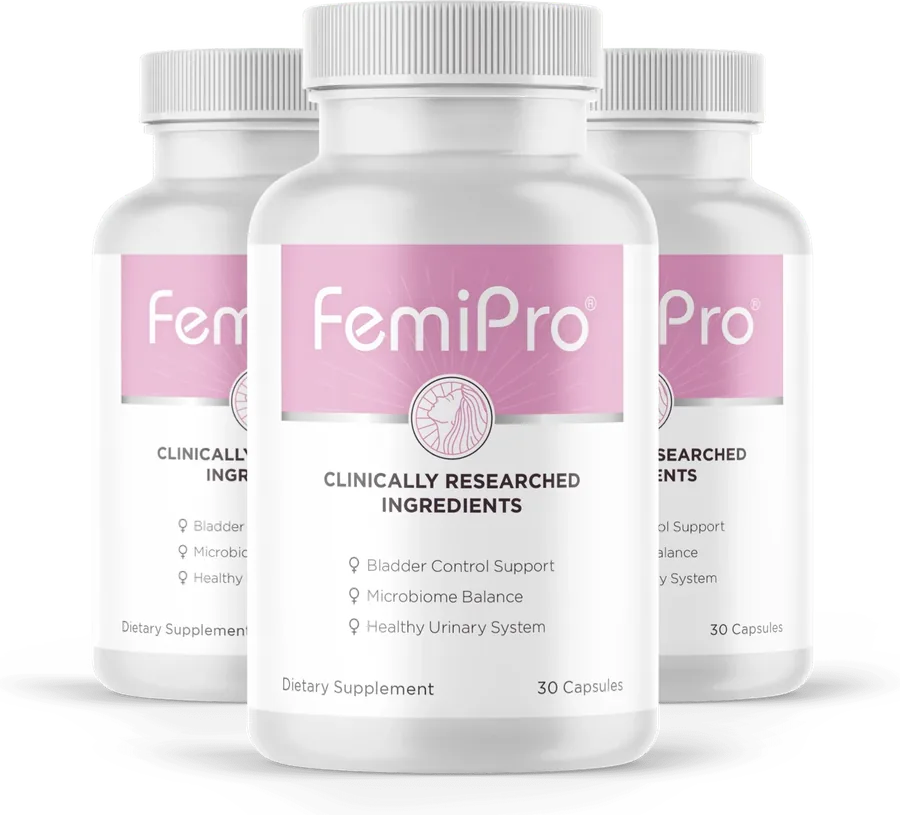
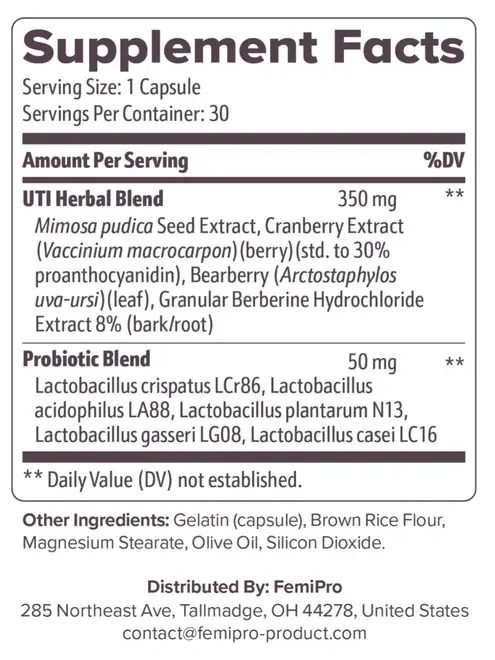
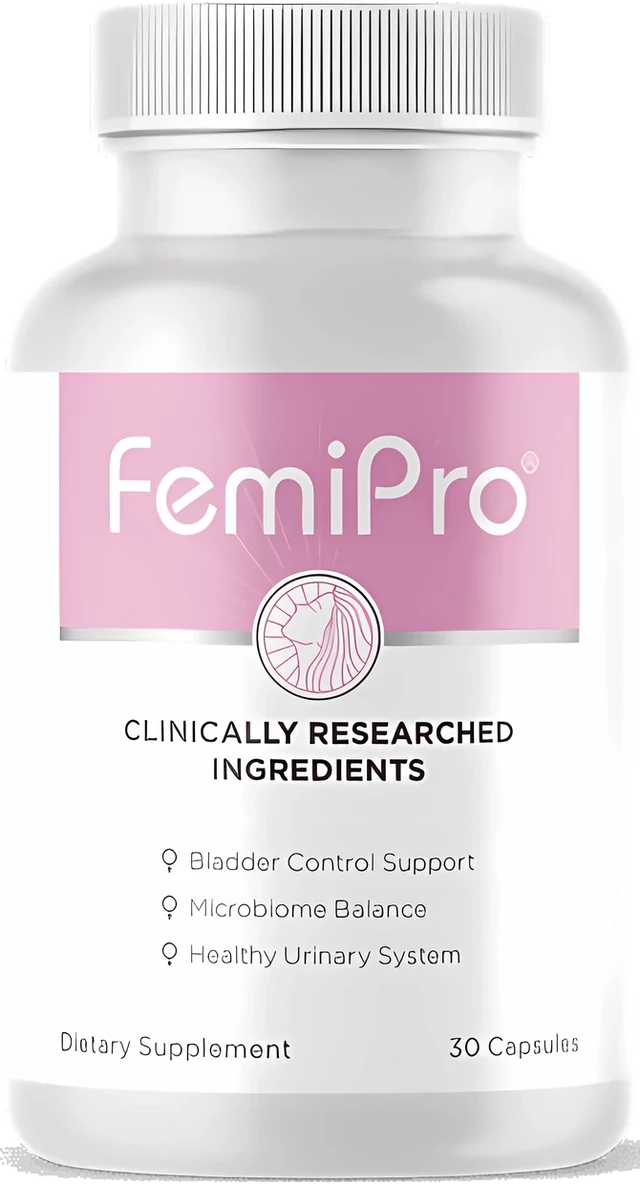
FemiPro herbal supplements means the 350 mg herbal blend in each capsule: mimosa pudica seed, cranberry, bearberry leaf and berberine. The label prints the blend total but no amount for any herb. Cranberry has the most human research. Bearberry is a short-course herb, and berberine can affect how medicines work.
Written by the FemiPro label teamUpdated · 5 min read
At a glance01
Key facts
- The herbal blend is 350 mg per capsule and holds four herbs, in label order.
- The four herbs are mimosa pudica seed, cranberry, bearberry leaf and berberine.
- Cranberry is standardized to 30% proanthocyanidins; berberine is a granular hydrochloride extract at 8%.
- No amount is printed for any single herb.
- The capsule has not been tested in a trial.
- Ask a pharmacist first if you take daily medicines.
FemiPro: from $49 a bottleA bottle is 30 capsules, one a day, and the guarantee runs 60 days.
See today's price and guaranteeThe basics02
What are the FemiPro herbal supplements in each capsule?
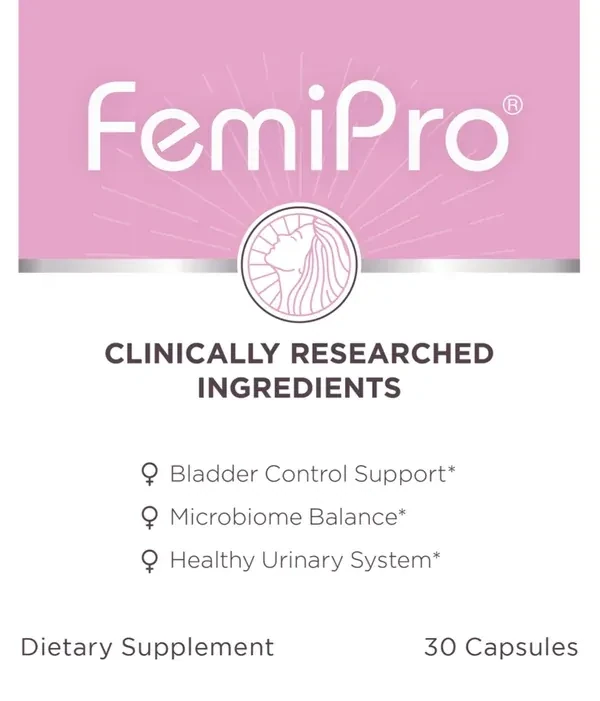
FemiPro herbal supplements, in this case, are one blend inside one capsule. The label calls it the UTI Herbal Blend. That is a name on a label, not a promise. FemiPro does not treat, cure or prevent any infection, and it is a dietary supplement, not a drug.
The blend totals 350 mg per capsule. Next to it sits a separate 50 mg probiotic blend of five Lactobacillus strains. Together the two blends make up 400 mg of the capsule.
Details03
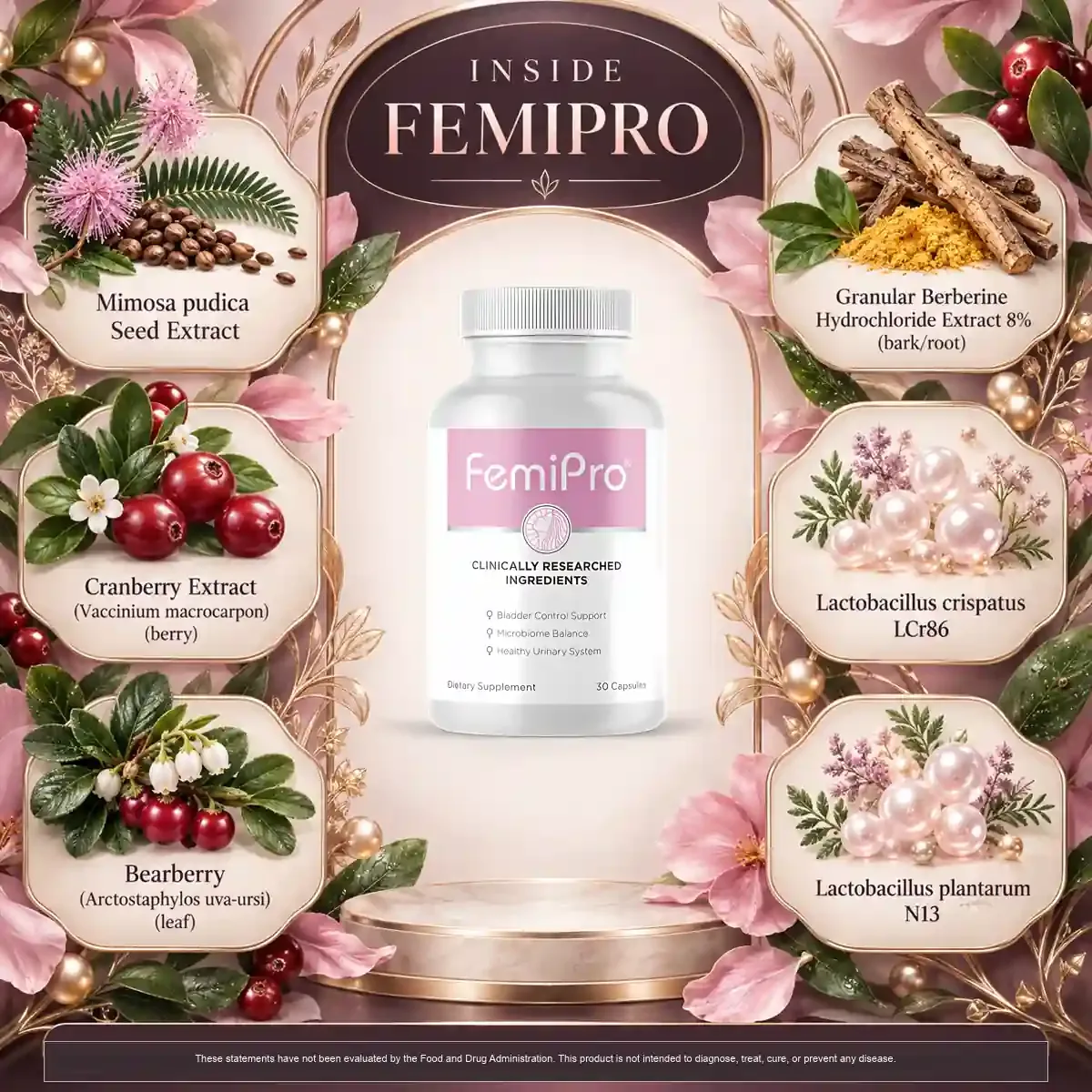
Which four herbs are in the FemiPro herbal supplements?
The panel lists them in this order, heaviest first:
- Mimosa pudica seed extract
- Cranberry extract (Vaccinium macrocarpon), standardized to 30% proanthocyanidin
- Bearberry (Arctostaphylos uva-ursi) leaf
- Granular berberine hydrochloride extract 8%
Because the label lists parts from most to least, line 1 can weigh at most the whole 350 mg, line 2 at most half of it, and so on. That is our arithmetic from label order. For the fourth herb, 350 divided by 4 gives at most 87.5 mg. These are ceilings, not the amounts in the capsule.
| Herb (label order) | Ceiling in 350 mg | Evidence in short |
|---|---|---|
| Mimosa pudica seed extract | At most 350 mg | Traditional use and lab data; no human bladder trial |
| Cranberry extract, 30% PACs | At most 175 mg | Most human research of the four, for repeat infections |
| Bearberry leaf | At most 116.7 mg | Traditional use; short courses only |
| Berberine HCl 8% | At most 87.5 mg | Studied for blood sugar, not the bladder; medicine interactions |
Evidence04
What does research say about each herb in FemiPro herbal supplements?
Cranberry has the most human data. A 2023 Cochrane review found that cranberry products probably lower the number of repeat urinary infections in women who get them. The trials used many juices, tablets and doses, so no single dose is set. The review does not cover this capsule.
Mimosa pudica seed rests on traditional use and lab data. No human bladder trial was found, and no human dose is established.
Bearberry leaf has traditional use in Europe for mild bladder symptoms. European guidance limits it to adult women, for no longer than one week. Its arbutin turns into hydroquinone in the body, which is why experts advise short courses.
Berberine has been studied for blood sugar and blood fats, not for the bladder. Reported side effects are mostly mild gut symptoms, and it acts on liver enzymes and drug carriers.
In practice05
What should you check before taking FemiPro herbal supplements?
The label asks pregnant or nursing mothers, anyone under 18 and anyone with a known medical condition to consult a physician first. Beyond that, three points stand out.
- Berberine can change how many medicines are handled, so tell a pharmacist about every daily medicine.
- Evidence on cranberry and warfarin is conflicting, so ask first if you take warfarin.
- Bearberry is not for people with kidney disorders in European guidance.
There is a daily-use gap too. FemiPro is labeled for one capsule every day, which runs past the one-week limit that European guidance sets for bearberry-leaf medicines. The bearberry amount in each capsule is not printed. It is at most 116.7 mg by label order. Ask a clinician whether a daily bearberry product suits you.
Safety06
What does the label leave out about the herbs?
The label gives the blend total and the cranberry standardization. It does not give the amount of each herb. It gives no lab report, and no factory name. A blend total lets a brand list a weight without splitting it, so two products with the same 350 mg could hold very different mixes.
Our ingredient guide has a profile for each herb, and the ingredient list post walks through the label line by line.
FAQ07
Frequently asked questions
What herbs are in FemiPro?
Four: mimosa pudica seed, cranberry, bearberry leaf and berberine. Together they make up a 350 mg blend in each capsule.
How much of each herb is in FemiPro?
The label does not say. It prints only the 350 mg blend total. The ceilings in this post are arithmetic from label order, not real amounts.
Are FemiPro herbal supplements safe?
No safety study of the capsule exists. Ingredient reports show mostly mild stomach effects, but berberine and bearberry carry specific cautions, so ask a pharmacist first.
Which FemiPro herb has the best research?
Cranberry has the most human research, for repeat urinary infections in women who get them. That research is not about this capsule.
Can I take FemiPro with other herbal supplements?
Ask a pharmacist. Other products may repeat an ingredient such as bearberry, and berberine can change how many medicines are handled.
Is FemiPro vegetarian?
No. The capsule shell is gelatin, which comes from animals, even though a vegetarian badge circulates in vendor art.
Verdict08
Our view
We think the herbal blend is the more interesting half of the capsule, and also the half with more cautions. Cranberry is a fair choice. Bearberry on a daily basis is the odd one, and berberine needs a pharmacist check for anyone on medicines.
If you try it, ask first, keep a diary and decide before day 60. The hidden single amounts are the main reason to stay modest in your expectations.
For more, read the FemiPro ingredients guide and the label explained.
FemiPro: from $49 a bottleThe checkout shows the final total and the guarantee wording. Read both before you pay.
See today's price and guaranteeWho wrote this07
Written and reviewed by
Pages built from the label, the sales page and linked NIH, FDA, FTC and peer-reviewed sources.
Last updated . Read our editorial standards and how we check reviews. This website is run by a U.S. stocking partner for FemiPro, not by the manufacturer or the label's distributor. We earn money when you buy through our order links.
Keep reading
More about FemiPro
U.S. stocking partner for FemiPro
Ready to try FemiPro?
Check your medicines first, then pick a pack. Every pack ships free in the US, six bottles cost the least per bottle, and each order carries the 60-day money-back guarantee.
- Secure checkout
- 60-day money-back guarantee
- Ships from the U.S.