Blog · Safety
Uva Ursi Hydroquinone: What It Is and Why Short Courses Are Advised
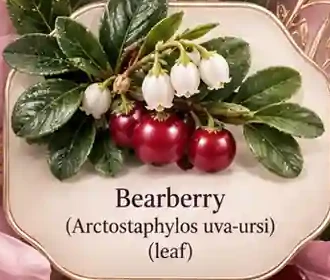
Uva ursi hydroquinone is the compound thought to drive both the herb's urinary action and its safety limits. LiverTox says it comes from arbutin and is potentially carcinogenic, so uva ursi is advised only in short courses. FemiPro lists bearberry leaf, at most 116.7 mg, in a daily capsule.
Written by the FemiPro label deskUpdated · 4 min read
The compound01
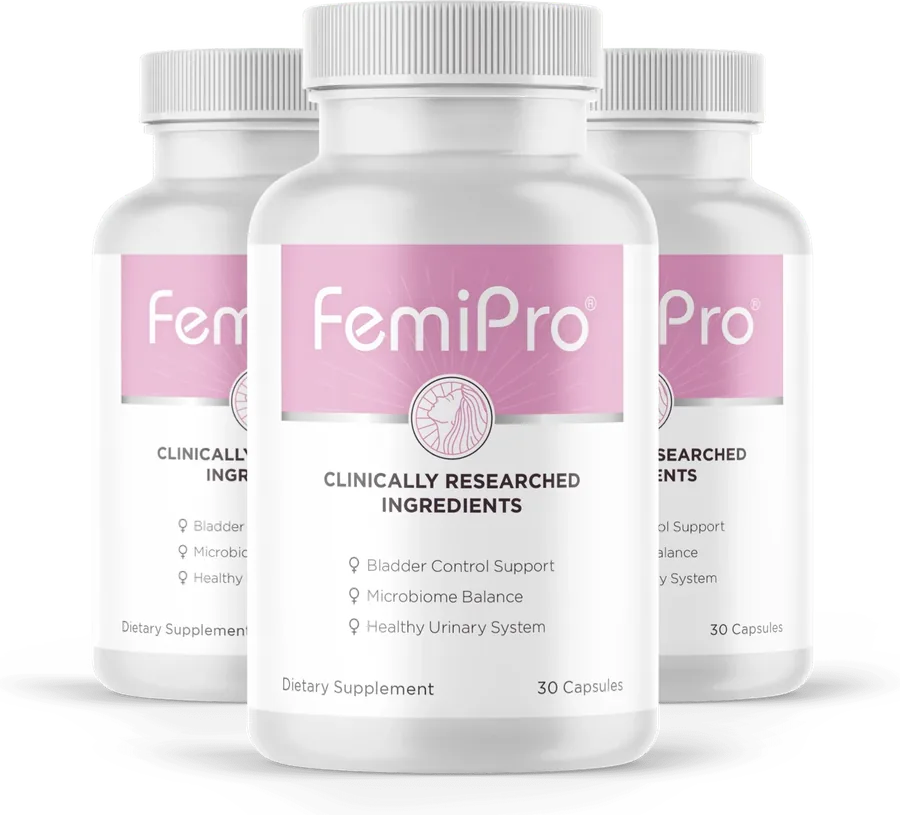
What is hydroquinone in uva ursi?
Hydroquinone in uva ursi is a compound the body releases from arbutin and methyl arbutin, which are natural substances in the leaf. LiverTox suspects it is the active component, and notes it is excreted in the urine (LiverTox, Uva Ursi).
That route is why uva ursi has a place in traditional use for the lower urinary tract. It is also why the safety advice exists, since the compound passes through the kidneys and bladder on its way out.
The record is not alarming in every respect. LiverTox rates uva ursi as unlikely to cause clinically apparent liver injury and found no convincing published cases. The caution rests on a different point, as the next section explains.
The safety record02
Why is uva ursi limited to short courses?
Uva ursi is limited to short courses because hydroquinone is potentially carcinogenic. LiverTox recommends short courses only and not chronic use for that reason (LiverTox, Uva Ursi).
The European Medicines Agency draws a similar line in plain days. Its monograph says no longer than one week, and to see a doctor if symptoms last more than four days (EMA/HMPC, Uvae ursi folium (bearberry leaf)).
| Point | Source and finding |
|---|---|
| Active component | LiverTox: hydroquinone from arbutin and methyl arbutin |
| Main concern | LiverTox: potentially carcinogenic, so short courses only |
| High doses | LiverTox: nausea, vomiting, tinnitus, breathing difficulty; rarely convulsions |
| Years of heavy tea use | LiverTox: one case report of an eye condition, bull's eye maculopathy |
| Duration | EMA: no longer than one week |
| Kidney disorders | EMA: must not take bearberry leaf medicines |
The eye case involved years of heavy tea use. It is a single report and says nothing about a capsule.
The FemiPro line03
How much uva ursi could a FemiPro capsule hold?
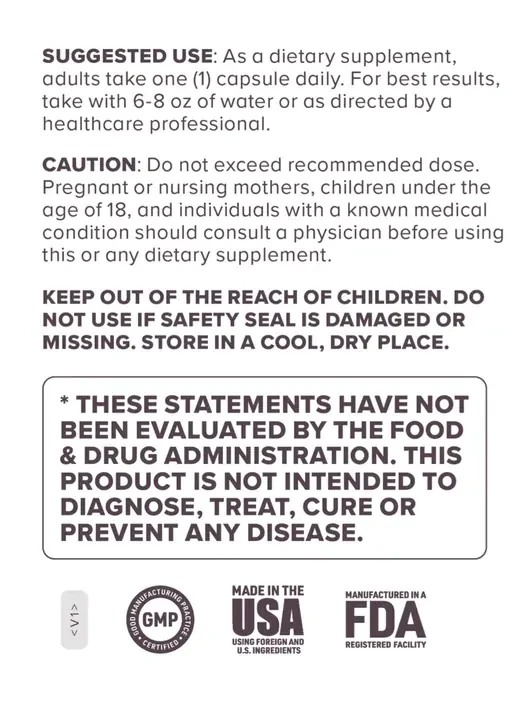
A FemiPro capsule could hold at most 116.7 mg of bearberry leaf, and the label prints no actual weight. The figure is 350 mg divided by 3, because bearberry is the third of four herbal lines listed by weight (21 CFR 101.36, supplement labeling).
The label says nothing about arbutin or hydroquinone content, and no lab report is published. So a reader cannot work out how much hydroquinone a capsule could release. Any number offered would be a guess.
Herbal blend ceilings
- 1Mimosa pudica seed extract≤ 350 mg
- 2Cranberry extract (30% PAC)≤ 175 mg
- 3Bearberry leaf (uva-ursi)≤ 116.7 mg
- 4Berberine hydrochloride extract 8%≤ 87.5 mg
Probiotic strain ceilings
- 1Lactobacillus crispatus LCr86≤ 50 mg
- 2Lactobacillus acidophilus LA88≤ 25 mg
- 3Lactobacillus plantarum N13≤ 16.7 mg
- 4Lactobacillus gasseri LG08≤ 12.5 mg
- 5Lactobacillus casei LC16≤ 10 mg
Step 1. The label prints two totals only: 350 mg for the "UTI Herbal Blend" and 50 mg for the "Probiotic Blend".
Step 2. A blend lists its lines from most to least by weight, so line k can weigh at most the total divided by k.
Step 3. So cranberry is at most 175 mg (at most about 52 mg of PACs at 30%), berberine extract at most 87.5 mg, and the five strains average 10 mg with no CFU count.
These are our sums from the label, not lab results. A blend has to list its total and its order, not single amounts (21 CFR 101.36, supplement labeling).
A worked case shows the range. If bearberry took a third of the herbal blend, it would weigh about 117 mg. If it took a tenth, it would weigh 35 mg. The label fits both, and the hydroquinone exposure would differ by a factor of three.
What is known is the pattern of use. The label directs one capsule a day, so a bottle runs 30 days, and a six-bottle pack runs 180. The safety sources speak of short courses and a week. That gap is the honest reason to ask a clinician before you start.
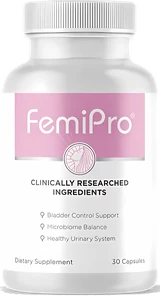
FemiPro: from $49 a bottle30 capsules · 1, 3 or 6 bottles · free US shipping · 60-day money-back guarantee
See packsWhat to do04
Is a daily bearberry capsule a concern?
A daily bearberry capsule is a fair thing to question, because the sources advise short courses and the capsule has no end date. The label itself asks pregnant or nursing mothers, anyone under 18 and anyone with a known medical condition to consult a physician first.
This is not a reason for fear. It is a reason for a short conversation, held before the first capsule rather than after the last.
Take that caution seriously if you have a kidney disorder, since the EU text says those women must not take bearberry leaf medicines. If you are unsure what counts as a disorder, ask your doctor and bring the Supplement Facts panel.
Keep taking prescribed medicine. And if you have burning, urgency, fever or back pain, call a clinician. A urinary tract infection needs a clinician and usually antibiotics (CDC, UTI basics). See the FemiPro bearberry page for the full ingredient file.
U.S. stocking partner for FemiPro
Ready to try FemiPro?
Check your medicines first, then pick a pack. Every pack ships free in the US, six bottles cost the least per bottle, and each order carries the 60-day money-back guarantee.
- Secure checkout
- 60-day money-back guarantee
- Ships from the U.S.
FAQ05
Hydroquinone questions, answered
Does uva ursi damage the liver?
LiverTox rates uva ursi as an unlikely cause of clinically apparent liver injury and found no convincing published cases. Its caution is about hydroquinone being potentially carcinogenic, so use is limited to short courses.
What are the signs of too much uva ursi?
LiverTox lists nausea, vomiting, tinnitus and breathing difficulty at high doses, and rarely convulsions. Stop and seek care if you have these. The EU monograph also lists stomach ache.
Is hydroquinone in uva ursi the same as skin-lightening cream?
The sources here do not compare them. They speak only of hydroquinone released from arbutin in the leaf. Do not infer cream rules for a capsule; ask a pharmacist.
Who wrote this06
Written and reviewed by
Pages built from the label, the sales page and linked NIH, FDA, FTC and peer-reviewed sources.
Last updated . Read our editorial standards and how we check reviews. This website is run by a U.S. stocking partner for FemiPro, not by the manufacturer or the label's distributor. We earn money when you buy through our order links.
Keep reading
More about FemiPro
U.S. stocking partner for FemiPro
Ready to try FemiPro?
Check your medicines first, then pick a pack. Every pack ships free in the US, six bottles cost the least per bottle, and each order carries the 60-day money-back guarantee.
- Secure checkout
- 60-day money-back guarantee
- Ships from the U.S.